Audio
Trump Promised Big On Coal. Can He Deliver?
|
Coal country is celebrating Donald Trump’s election victory. Support for Trump was strong from Appalachia to Wyoming, and people have high hopes he can reverse coal’s recent downturn. But can he?
Inside Energy (https://insideenergy.org/series/futureofcoal/page/2/)
Between federal regulations to restrict carbon dioxide emissions and mercury pollution, cheap natural gas, and concerns about climate change, the coal industry in this country is under threat. Since 2012 nearly 60 coal-burning power plants have partially or completely shut down. But the dirty fuel still supplies 40% of our power and is critical, proponents say, for maintaining the reliability of our electricity infrastructure.
We want to know: What is the future of coal in the United States? How have federal regulations impacted its use across the country? How is the transition off of coal being felt in coal-dependent communities and states? Are there ways to burn and use coal that are cleaner, and will lessen its negative environmental impact? Inside Energy has covered these issues in a series of stories produced in collaboration with Allegheny Front, West Virginia Public Broadcasting, and High Plains News. We continue to report on these stories as they unfold.
Coal country is celebrating Donald Trump’s election victory. Support for Trump was strong from Appalachia to Wyoming, and people have high hopes he can reverse coal’s recent downturn. But can he?

What to do about coal jobs has been a major theme this election season, with each side pointing fingers at the other, from the presidential debate stage to local town halls. On Colorado’s western slope, two candidates running for Congress are divided on the issue and are nearly matched in campaign contributions as election day approaches.
During the second Presidential debate, Donald Trump responded to a question about energy policy by saying, “There is a thing called clean coal. Coal will last for a thousand years in this country.” An Inside Energy follower named David asked us, “#CleanCoal: True or false prophecy?” We try to answer that question.
Inside Energy and The Allegheny Front teamed up to look at how the American coal industry is dealing with the latest crisis.
As coal companies go bankrupt there is growing concern and uncertainty over who will pay to clean up those mines. But Texas has been there before. In 2014, the state’s largest coal company filed for bankruptcy with over $1 billion in outstanding cleanup costs. Now, more than two years later, this case is held up an example of what works.
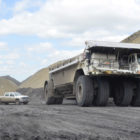
The coal industry’s hurting from West Virginia to Wyoming. But there’s a holdout on the Northern Plains, where coal’s alive and well. North Dakota burns lignite, a different type of coal than the rest of the country. But even the industry there feels mounting pressure.
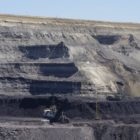
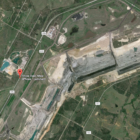
Glance at a satellite image of northeast Wyoming, and you can’t miss the coal mines. Even zoomed out, the square-cornered grey blotches stand out—stretching north to south over more than 70 miles. But if all goes according to plan, someday, when the mining is done, those scars will disappear, erased from the landscape by intensive reclamation efforts. Coal companies are on the hook for that cleanup, but the industry’s recent collapse has raised questions about whether they will actually be able to meet those obligations.
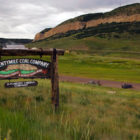
Cheaper natural gas has dealt a blow to the coal industry — and to Routt County school district. Before the district opened an all-day preschool in the small town of Yampa, there wasn’t an affordable day care program for this mostly working class community. When Peabody Energy, owner of Routt County’s Twentymile Mine, went into bankruptcy and failed to pay property taxes, it would have been the first thing to go. But the school district hasn’t let that happen.

Frank Thompson was one of almost 500 miners laid off in Wyoming in a single day earlier this year. Now, he’s trying to figure out life after mining—how to provide for his son, and how to bounce back.
A judge in Richmond, VA approved coal giant Alpha Natural Resources’ plan to get out of bankruptcy Thursday. The approval went through, in part, because Alpha agreed to put up real financial assurances to cover future reclamation costs, which totaled hundreds of millions of dollars.